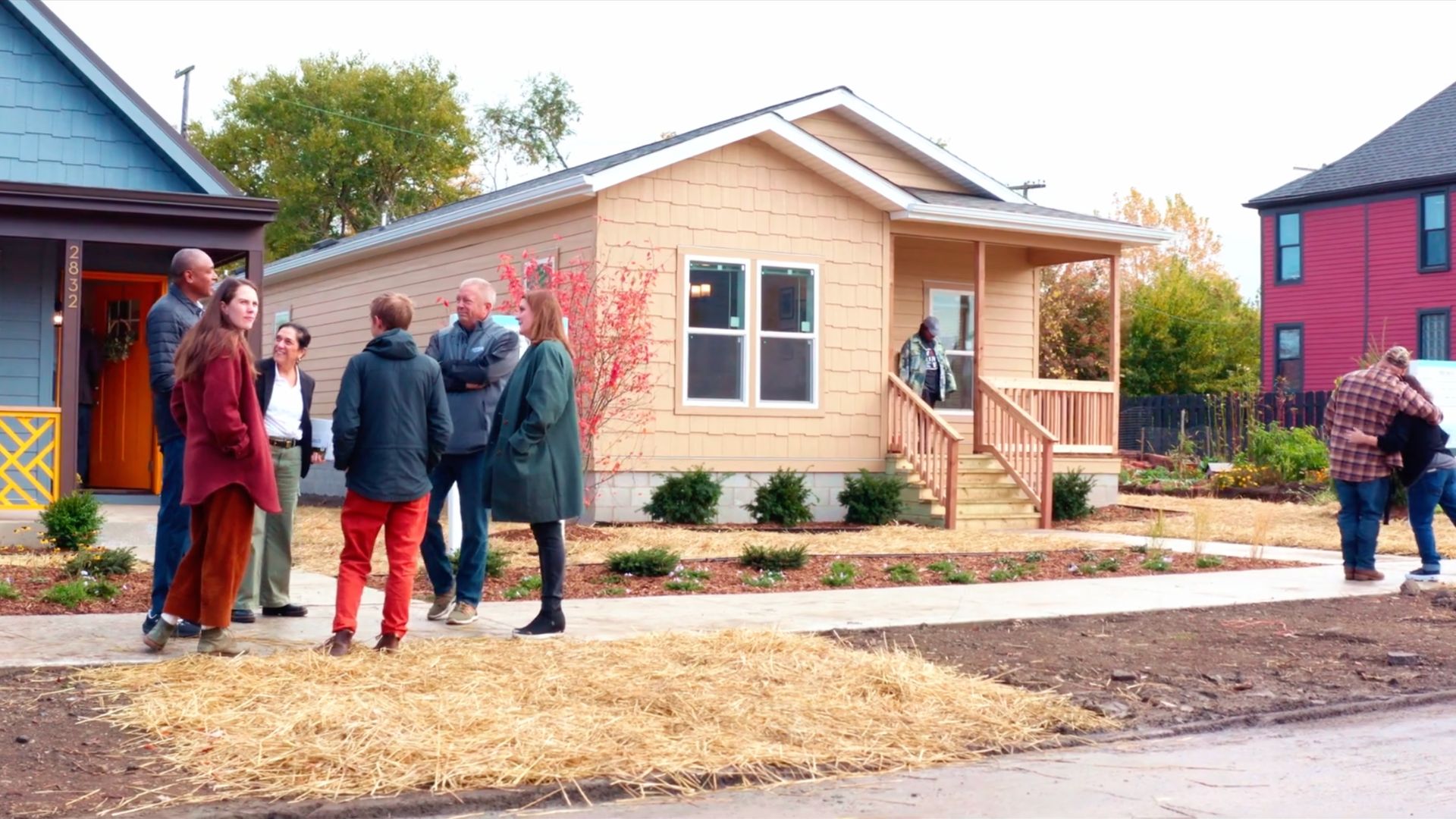
Manufactured Homes Just Proved Everyone Wrong! They Appreciate!
Let’s Just Get Straight to It
From 2019 to 2026:
- Manufactured homes with land appreciated about 70%
- Traditional single-family homes appreciated about 58.6%
So the thing everyone wrote off?
It didn’t just keep up, it beat traditional housing.
That should be a much bigger deal than people are making it.
The Industry Has Been Fighting the Wrong Battle
For years, manufactured housing has leaned hard into one message:
“It’s more affordable.”
And yeah… it is.
- ~$141K vs ~$410K
- ~$678/month vs $1,900+
That matters. A lot.
But affordability alone doesn’t change perception.
People don’t want “cheap.”
They want:
- Something that holds value
- Something that gives them a path forward
- Something that doesn’t feel like a step down
And that’s where appreciation changes everything.
The Reality Today: The Product Has Evolved
Manufactured housing has come a long way, and the progress is showing up in the data.
Today’s homes are:
- Built to federal HUD standards
- Designed with layouts and finishes that compete with site-built homes
- Placed in stronger locations and developments
- Increasingly paired with land ownership
All of that matters.
Because as those fundamentals improve, so does performance.
What we’re seeing now (supported by data from Realtor.com) is that modern manufactured homes are participating in the market the way housing is supposed to.
They’re not being viewed as something separate.
They’re being valued as real property with real potential.
And that’s an important shift.
They’re behaving like real estate.
Because they are.
Land Strengthens Value, And Why It Needs to Be Embraced
If there’s one thing the data continues to show, it’s that pairing a manufactured home with land creates a powerful foundation for long-term value.
When you combine the two, you’re aligning with the same fundamentals that drive traditional real estate:
- Stronger and more consistent appreciation
- Expanded financing opportunities
- Greater long-term stability
That’s not a small detail—that’s a major part of why manufactured housing is gaining more attention today.
But the bigger point is this:
We need more opportunities to place these homes on land.
As affordability continues to be a challenge across the country, restricting manufactured housing at the local level only limits one of the most efficient paths to homeownership.
Manufactured homes on land are not a workaround or a secondary option;
They are a direct, scalable solution to the housing shortage.
And the more they’re accepted and integrated into local markets, the more people can access real ownership, real equity, and real long-term value.
Even Without Land… The Old Narrative Still Doesn’t Hold
At the same time, manufactured home communities are a critical and often underappreciated part of the housing ecosystem.
They provide:
- Attainable entry points into homeownership
- Established neighborhoods with infrastructure already in place
- A sense of stability and community for residents
- Flexible options for buyers at different stages of life
And importantly, they continue to show real market performance.
Data from Realtor.com shows that even homes in land-lease communities have experienced meaningful appreciation in recent years—often exceeding 50%.
That reinforces something the industry already knows:
These homes have value, and so do the communities they’re part of.
This isn’t about choosing between land or communities.
It’s about recognizing that both play a role in expanding access to housing.
Because at the end of the day, the goal is simple:
More people in homes they can afford, in environments that work for them, with the ability to benefit over time.
Why This Is Actually a Big Deal
Most people will read this and think, “Okay, manufactured homes are doing better.” That’s not the real takeaway.
The real takeaway is this:
The market is starting to recognize manufactured housing as actual housing.
And that shift is bigger than it sounds.
Because once that happens:
- Buyers stop dismissing it
- Lenders start adapting
- Builders lean in
- Platforms give it real visibility
And when all of that starts to move together, the entire category moves up.
This isn’t just about one type of buyer either.
Yes, first-time buyers benefit—no question.
But affordability is hitting everyone right now.
People trying to custom build are feeling it.
People with money are still watching costs.
People who could afford traditional housing are still looking for smarter ways to do it.
Manufactured housing fits into all of that.
- It gives buyers more control over cost
- It opens up paths to build on land
- It creates options that didn’t exist before at this price point
So for some, it’s the way into homeownership.
For others, it’s just a better way to get the home they actually want.
Either way, it’s not a niche solution anymore. It’s part of how people are solving for housing today.
https://www.realtor.com/research/mobile-homes-march-2026
| Metro Area | Percent of U.S. Mobile Home Listings | Percent of All U.S. Home Listings |
| Outside All Metro Areas | 9.5% | 6.0% |
| Tampa-St. Petersburg-Clearwater, FL | 5.9% | 1.8% |
| Phoenix-Mesa-Chandler, AZ | 4.1% | 2.1% |
| Riverside-San Bernardino-Ontario, CA | 3.5% | 1.3% |
| Lakeland-Winter Haven, FL | 3.4% | 0.5% |
| North Port-Bradenton-Sarasota, FL | 3.0% | 1.0% |
| Orlando-Kissimmee-Sanford, FL | 2.8% | 1.3% |
| Cape Coral-Fort Myers, FL | 2.0% | 1.2% |
| Los Angeles-Long Beach-Anaheim, CA | 1.7% | 1.7% |
| Deltona-Daytona Beach-Ormond Beach, FL | 1.5% | 0.6% |